
Artificial intelligence has moved beyond the realm of science fiction and research labs — it now sits at the core of the world's most profitable online retail operations. From Amazon's recommendation engine to Alibaba's visual search, AI is fundamentally rewriting the rules of how businesses sell and how consumers buy.
In 2025, the global AI in e-commerce market is estimated to surpass $22 billion, growing at a CAGR of over 34%. For businesses that haven't begun integrating AI into their digital commerce strategy, the clock is ticking. Here are the five most impactful trends you need to understand.
1. Hyper-Personalised Product Recommendations
Gone are the days of generic "customers also bought" carousels. Modern AI recommendation engines analyse hundreds of signals — browsing history, purchase patterns, social behaviour, device type, time of day, even weather — to surface products with uncanny relevance.
Platforms like Nosto and Dynamic Yield now offer plug-and-play recommendation engines for mid-market retailers. Enterprises are building custom models using transformer architectures that treat shopping sessions like natural language — predicting the next item a customer will want the same way GPT predicts the next word.
"According to McKinsey, 35% of Amazon's revenue comes directly from its recommendation engine. For most e-commerce stores, personalisation can lift conversion rates by 20–30%."

2. Visual Search and AI-Powered Discovery
Text-based search is being supplemented — and in some categories replaced — by visual search. Customers can now photograph a product they see in the real world and instantly find it (or something similar) in your catalogue.
Pinterest Lens, Google Lens and eBay's visual search have popularised this behaviour. In fashion and home décor, visual search is now a primary discovery channel for mobile shoppers under 35. The technology relies on convolutional neural networks (CNNs) trained on millions of product images to extract visual features and match them at scale.
What this means for your business:
- Product image quality is now a direct SEO and conversion factor
- Multiple-angle product photography improves match accuracy
- Structured image metadata (alt text, schema markup) feeds AI training data
- Mobile-first product pages are essential — visual search is overwhelmingly mobile
3. Intelligent Inventory Management and Demand Forecasting
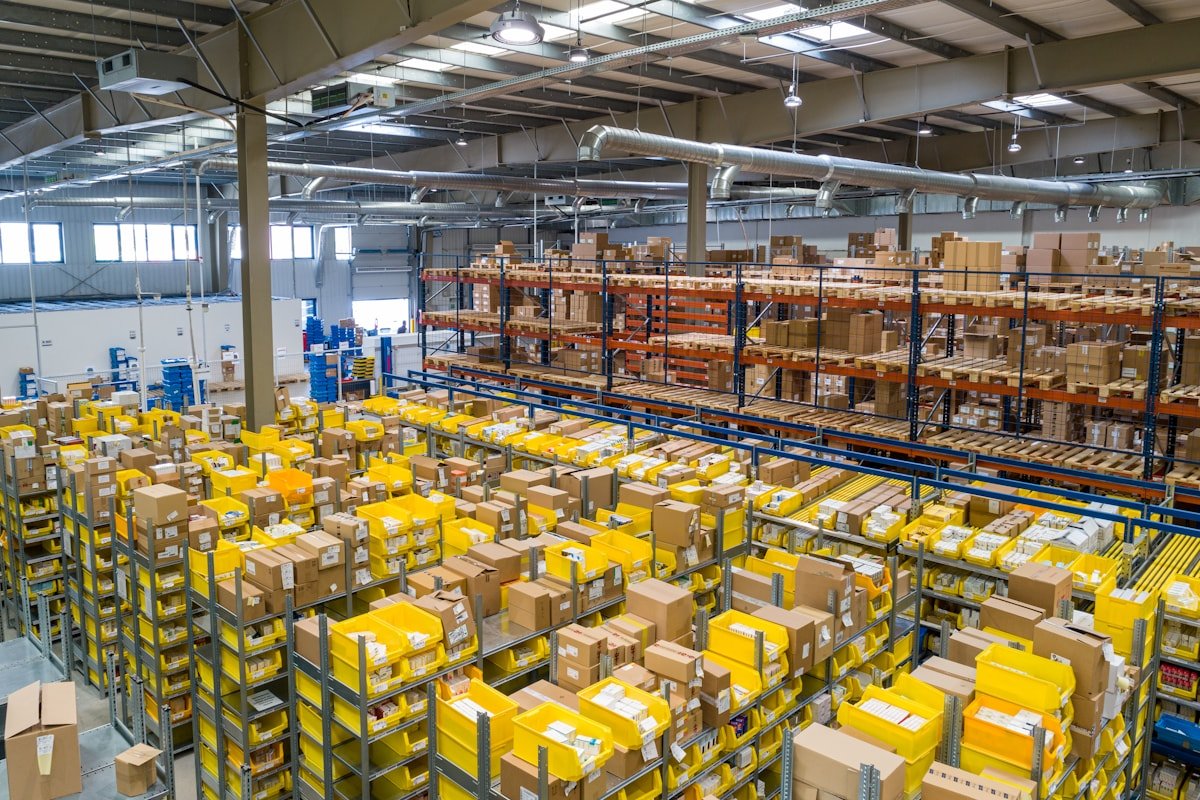
Traditional inventory management relied on historical sales data and educated guesses. AI-driven forecasting models consume vastly more data — seasonal trends, social media sentiment, local events, competitor pricing, even meteorological data — to predict demand with precision previously unattainable.
Retailers using AI-powered inventory systems report 20–50% reductions in stockouts and up to 30% reductions in overstock costs. For fashion retailers where trend cycles are measured in weeks, this is the difference between profitability and massive write-offs.
4. Conversational Commerce and AI Shopping Assistants
ChatGPT's widespread adoption has accelerated consumer comfort with AI-powered conversation. E-commerce brands are now deploying large language model (LLM)-backed shopping assistants that can hold nuanced product conversations, understand complex requirements ("I need a gift for my 7-year-old who loves dinosaurs and hates screen time, budget ₹1,500") and guide customers to purchase.
These aren't the clunky decision-tree chatbots of 2018. Modern conversational commerce tools integrate with your product catalogue, order management system and customer history to provide genuinely helpful, context-aware guidance — reducing the need for human support while increasing cart sizes.
5. Dynamic Pricing and AI-Driven Promotions
Airlines have used algorithmic pricing for decades. E-commerce is now following. AI pricing engines monitor competitor prices, demand signals, stock levels and customer lifetime value to adjust prices in real-time — maximising margin when demand is high, staying competitive when it's not.
The next evolution is personalised pricing and promotion targeting: identifying the exact discount threshold required to convert a hesitant customer, rather than blanket sitewide sales that erode margins unnecessarily.
"Dynamic pricing can increase e-commerce revenue by 5–25% without changing advertising spend — it's one of the highest-ROI AI applications for online retail."
Getting Started: A Practical Roadmap
Implementing AI doesn't require a billion-dollar R&D budget. Here's a pragmatic approach for SME retailers:
- Start with personalisation: Tools like Klaviyo, Omnisend, and Nosto offer AI-powered personalisation without custom development.
- Optimise your product data: Clean, structured catalogue data is the foundation for every AI application. Invest here first.
- Implement a chatbot: Modern LLM-powered chatbots can be deployed in days and immediately reduce support load while improving conversion.
- Pilot dynamic pricing: Start with a single category and measure the margin impact before rolling out broadly.
- Invest in mobile UX: AI features must be accessible on mobile — where 70%+ of e-commerce traffic now originates.
The retailers who thrive in the next five years will be those who treat AI not as a technology experiment but as a core operational capability. The tools are mature, the ROI is proven, and the competitive pressure is real.